













5 Minute read
“Australian Made Fencing,100% Australian.”
They're phrases thrown around far too easily, seen in brochures, product blurbs and sales calls. But to us, Australian Made fencing and 100% Australian aren't marketing claims. They're the line between safety and disaster.
Across Australia, we've seen what happens when standards are ignored or sidestepped to cut costs. Structural failures, public liability cases, and in the worst cases, fatalities. The consequences are real, and often irreversible.
In an industry like security fencing, where the product's entire purpose is to protect people, assets and infrastructure, meeting standards isn't optional. It's foundational.
This article explains why Australian Standards exist, what they're designed to prevent, and why cutting corners on raw materials, compliance or local certification isn't just risky, it's reckless. We'll also explain the difference between Australian Made and 100% Australian, what true compliance looks like, and how to spot the difference between stated and certified standards.
Why Australian Standards Exist
Australian Standards aren't arbitrary checklists or red tape. They're nationally agreed benchmarks for safety, quality, performance and compliance. Developed by Standards Australia in consultation with industry experts, government and regulators, they're designed to prevent failure before it happens.
For years, the Australian fencing industry has deferred to British Standards for high-security fencing. That's now changing. A dedicated Australian high-security fencing standard, AS 5394:2026, has been drafted and is open for public comment, the first time we've had a complete, localised set of standards tailored to Australian conditions and expectations. Profence General Manager Ben Gregson has been directly involved in developing it, working alongside other industry leaders to shape what the standard covers. You can read more about what AS 5394 means for the industry in our article on Australia's new security fencing standards.
These standards represent more than specifications. They're a promise that our infrastructure is built for Australian conditions, without compromise.
Why Standards Should Never Be Optional
When standards are bypassed, whether through imported alternatives, cost-cutting, or shortcuts during installation, the consequences are often far more serious than a failed inspection.
They can be fatal.
Across Australia, numerous incidents have shown what can go wrong when standards and compliance codes are treated as optional. Not every example is from the fencing industry, but they all reinforce the same truth: minimum standards exist because people's safety depends on them.
The Lacrosse and | Playground | Balcony Collapse |
|---|---|---|
Both buildings were clad in flammable imported materials that didn’t comply with fire safety standards. The result? Massive blazes, evacuations, and class actions involving millions of dollars.
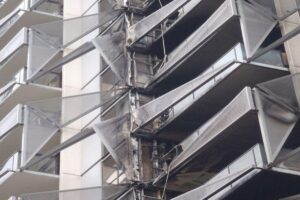 The Lacrosse building in Melbourne’s Docklands. Image: Metropolitan Fire Brigade | Between 2011 and 2020, the ACCC reported over 400 injuries linked to non-compliant playground equipment. Many of these incidents were traced back to suppliers or installers who didn’t follow required specifications—something we’re all too familiar with in the Australian Standards fencing space, where compliance is critical for safety
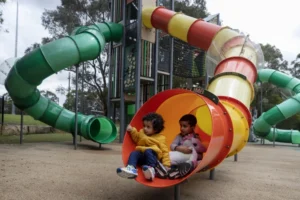 Dastagir and Maaz Mohammed play on a tube slide at Strathfield Park. Credit:Nikki Short | Two women died and many more were injured when a balcony collapsed under the weight of partygoers. The coroner found serious construction failures and non-compliance with structural standards.
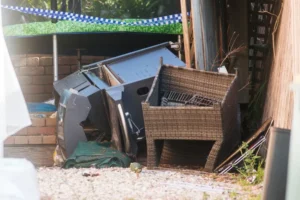 Some of the items fell more than two meters as the balcony collapsed. Credit:Paul Jeffers |
These are not isolated mistakes, they're predictable outcomes of non-compliance.
These aren't isolated mistakes. They're predictable outcomes of non-compliance. In fencing, the same risks apply:
- A faulty anti-climb mesh can allow unauthorised access to high-security zones.
- Compromised or damaged mesh can also let individuals escape secure facilities, posing serious safety and security risks.
- A rust-prone post system may fail under stress, putting people at risk.
- A misaligned gate or weakened latch could cause injury on a school or construction site.
And when something goes wrong, it's not just the installer who's held accountable. It's everyone in the chain, from specifier to supplier.
Why Australian Made Fencing and 100% Australian Matter
When people picture critical safety infrastructure, they think of fire systems, engineering tolerances, or load-bearing walls. But fencing plays just as crucial a role in protecting people and assets, especially when it comes to security, liability and long-term durability.
A fence isn't just a barrier. It's often the first line of defence.
When standards aren't followed on fencing projects, the risks are real and they compound over time. Here's what non-compliance often looks like on the ground:
- Welds that crack or fail under tension
- Anti-climb designs that don't meet spacing or height regulations
- Gates that can't self-close or fail under repeated use
- Imported components that don't align with AS 1725, AS 4687 or site-specific requirements
Many of these failures seem minor at first. But they often emerge after the job is signed off, when the cost of fixing them is far greater. For example:
- A failed industrial perimeter fence could allow break-ins, triggering major insurance issues.
- A non-compliant school gate could injure a child, leading to a negligence claim.
- A misaligned security mesh panel could void a facility's compliance certification.
When the wrong product is chosen, or the right one isn't installed to standard, the risk doesn't just sit with the installer. It flows back to the project manager, the procurement officer, and the company that supplied it.
Australian Made Matters But - 100% Australian is Ultimate!
Buying Australian today means more than supporting local jobs. It means choosing a supply chain that holds the country up.
As more suppliers join the Australian Made movement, we welcome the shift. It's moving in the right direction. But the real difference comes when manufacturers use Australian raw materials in the process.
Many products qualify for Australian Made certification, but that doesn't always mean the materials were sourced locally. At Profence, we go deeper. Our materials are 100% Australian sourced, not just manufactured here, giving our clients full transparency, local quality and peace of mind.
If you're planning your next high-security or commercial fencing project, ask:
- Do you know where the steel came from?
- Do you know if the fabrication was done under local standards?
- Do you know the welds, fixings and finishes are suited to Australian conditions?
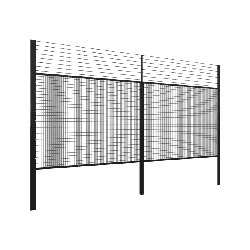
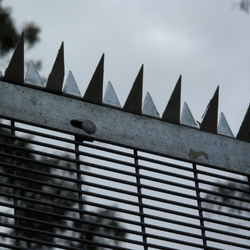
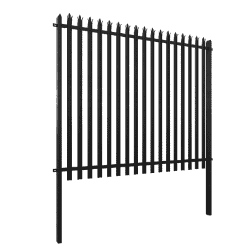
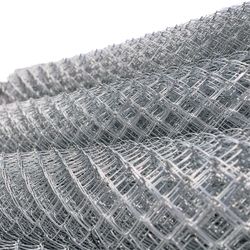
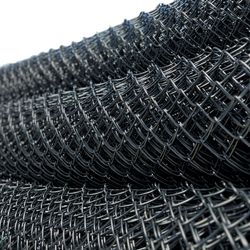
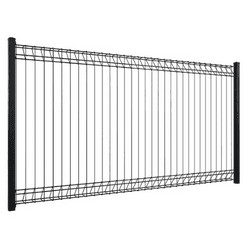
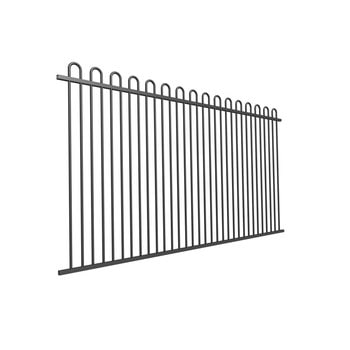
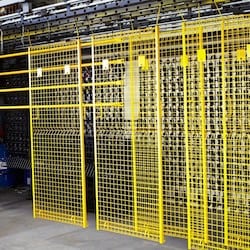
At Profence, we've built our reputation on certainty. Our Promax™ 358 mesh, Steelmesh, Chainwire and Palisade fencing systems aren't just Australian Made. They're made from 100% Australian raw materials, built to standard, and designed for Australian conditions and expectations.
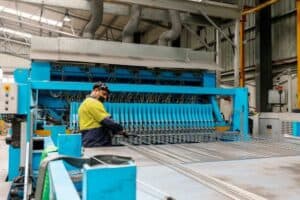
Protective Fencing team manufacturing
We manufacture to meet the most widely used fencing codes, including:
- AS 1725.1-2010 (Chainwire fencing for security and boundary use)
- AS/NZS 4687:2007 (Temporary fencing and hoardings)
- Custom project specifications based on site risk, industry and public use
We don't believe in "close enough." We believe in certified, compliant and proven. And we welcome the new Australian Standards for fencing currently in development, because we live and breathe compliance.
Cutting Corners Isn’t a Cost Saver, It’s a Risk Multiplier
When lives, reputations and infrastructure are on the line, compliance isn't optional. It's the minimum.
The problem in industries like fencing is that the consequences of non-compliance often don't surface until it's too late. A gate fails. A mesh panel buckles. A rusted post gives way. Suddenly the savings from a cheaper or uncertified product don't look like savings at all.
Choosing Australian Made products that meet Australian Standards isn't about ticking a box. It's about protecting people. It's about making sure the fence you install today doesn't become tomorrow's liability.
At Profence, we don't just manufacture fencing. We build security, trust and long-term performance, right here in Australia, for Australian projects.
Because in fencing, just like every other industry, standards save lives.
That's why Profence is proud to offer certified Australian fencing systems, from high-security 358 anti-climb mesh to chainwire and commercial-grade security solutions.
If you're searching for a trusted fencing supplier in Australia, one that delivers compliant, certified, Australian Made products using Australian materials, we'd love to talk.