













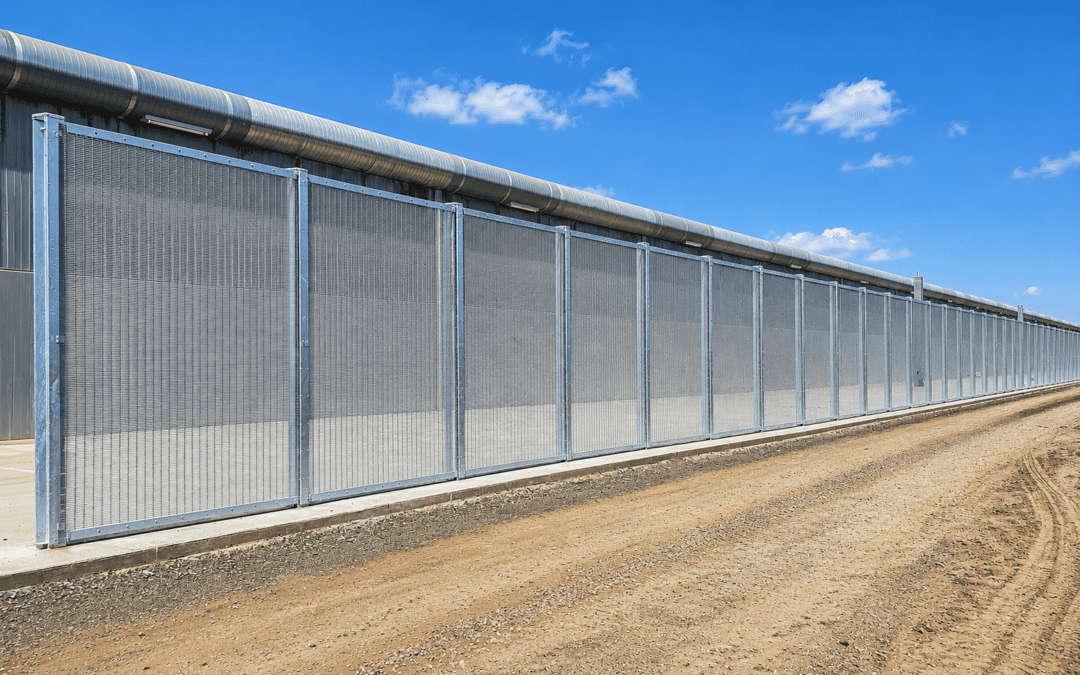
A security fencing system starts long before steel reaches the production floor.
For complex infrastructure, commercial and high-security projects, project drawings and specifications establish the design intent. But before a custom fencing system can be manufactured, those requirements often need to be translated into detailed, practical information for production.
That is where shop drawings play an important role.
At Protective Fencing, our in-house drafting capability creates a direct connection between project requirements, shop drawings and the people who ultimately manufacture the finished fencing system.
From custom gates and posts to baseplates, brackets, changes in level and project-specific interfaces, detailed shop drawings help turn design intent into a solution that can be manufactured.
What Are Security Fencing Shop Drawings?
Shop drawings provide detailed information about the components that will actually be manufactured for a project.
While architectural, engineering and project drawings establish broader design requirements, fencing shop drawings can develop the detail required to manufacture individual components and systems.
Depending on the project, these may include:
- Fence elevations and layouts
- Panel dimensions
- Fence heights
- Post centres and configurations
- Post and rail details
- Gate dimensions and configurations
- Baseplates and brackets
- Connection details
- Changes in height or ground level
- Security fence toppings
- Custom fabricated components
- Finishes and coatings
For straightforward fencing projects, many of these details may already be established through standard products and configurations.
For custom security fencing, however, the drawing process becomes particularly important.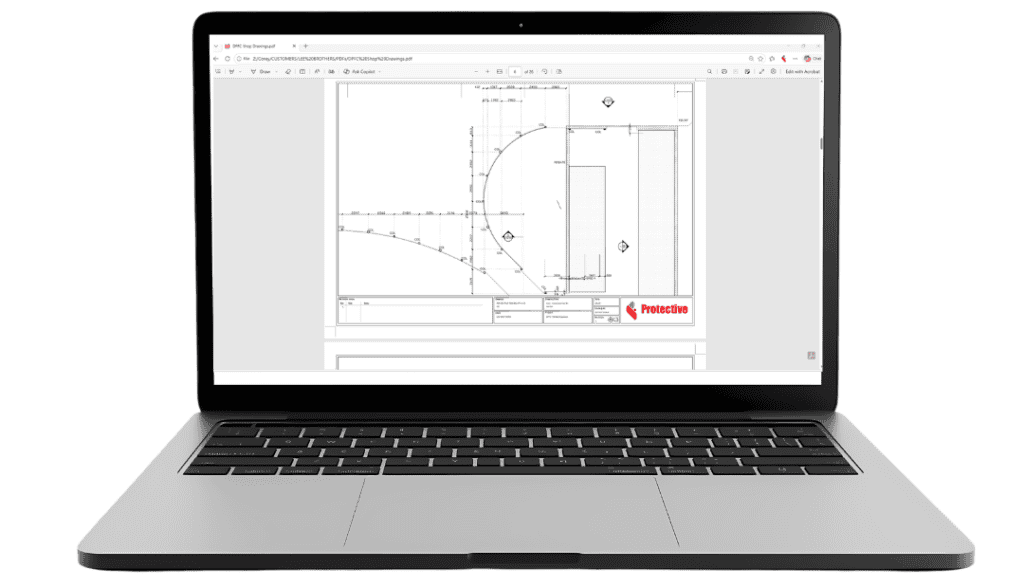
Why Shop Drawings Matter on Complex Security Fencing Projects
A perimeter fence may appear relatively simple on a site plan, but the detail required to manufacture it can be considerably more complex.
Consider a security fence that needs to change height, meet a retaining wall, incorporate an automated gate, accommodate a particular baseplate arrangement or transition between different fencing systems.
Each interface needs to work.
Shop drawings provide an opportunity to work through these details before fabrication begins.
They can also give contractors and project teams a clearer understanding of what is proposed for manufacture, allowing relevant details to be reviewed as part of the project's approval process.
This becomes increasingly important across projects involving critical infrastructure, utilities, transport, data centres, government, defence and high-security facilities, where fencing may form part of a much broader physical security strategy.
The Advantage of In-House Drafting
Having drafting capability within our manufacturing business creates an important connection between what is drawn and what can be manufactured.
Our drafting team works alongside the people involved in estimating, project coordination, fabrication and production.
That means questions arising during the drafting process can be considered with manufacturing in mind.
For example, a project-specific detail may have implications for:
- Material selection
- Fabrication
- Welding
- Component sizes
- Galvanising
- Powder coating
- Transport
- Installation
Identifying and considering these requirements before production can help reduce uncertainty once manufacturing begins.
For customers, it also means the shop drawing process isn't occurring in isolation from the people who will eventually make the product.
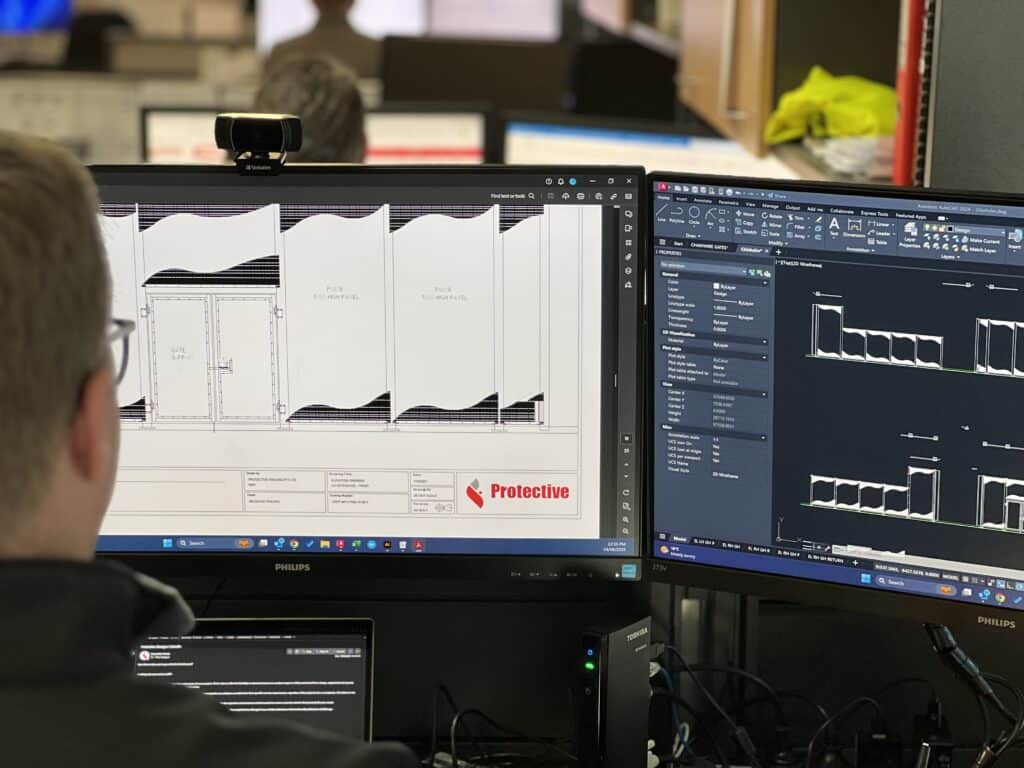
Profence In house drafting
From Customer Order to Production
For projects requiring shop drawings, there are several important steps before manufacturing can commence.
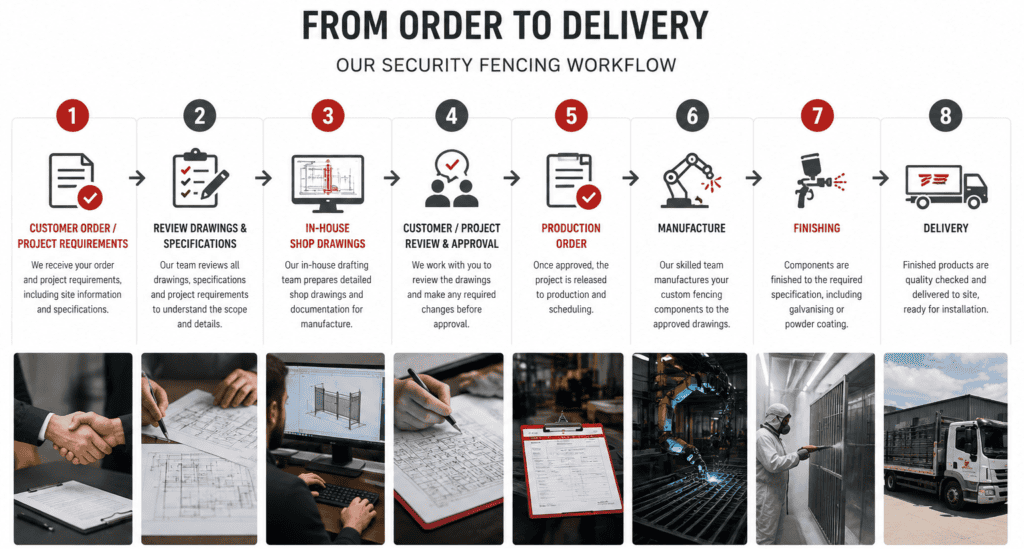
A typical process may look like:
Customer Order / Project Requirements
↓
Review Drawings & Specifications
↓
In-House Shop Drawings
↓
Customer / Project Review & Approval
↓
Production Order
↓
Manufacture
↓
Finishing
↓
Delivery
The exact process and timing will vary depending on the complexity of the project and the information and approvals required.
Importantly, shop drawing and approval time sits outside the physical manufacturing lead time.
Where project programs are tight, providing complete drawings, specifications and required information early can help the drafting and approval process progress efficiently.
Materials Planning Can Begin Alongside Drafting
Depending on the project and confirmed requirements, materials planning and procurement may also occur alongside the shop drawing process.
This helps coordinate the transition from an approved design into manufacturing while ensuring the required materials and components are considered as part of production planning.
From Drawing to the Production Floor
One of the benefits of an integrated drafting and manufacturing process is continuity.
Once the relevant shop drawings have been reviewed and approved, they provide detailed information that can support the release of the project into production.
The team manufacturing a custom gate, post, panel or fabricated component can work from the approved project information rather than relying on interpretation further down the process.
For complex fencing systems, that connection between drafting and fabrication is particularly valuable.
Not Every Fence Comes Out of a Catalogue
Standard fencing products have an important role across many projects.
But infrastructure and high-security environments frequently present requirements that aren't standard.
A project may require a:
Custom gate.
Non-standard post.
Special baseplate.
Change in fence height.
Interface with another structure.
Project-specific bracket.
Security topping configuration.
Or an entire perimeter may need to be configured around the particular site and security requirements.
Protective Fencing's manufacturing capabilities include a range of security fencing systems and custom components, including:
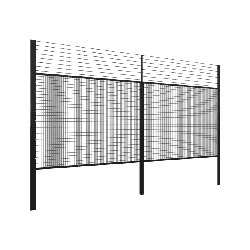
- 358 anti-climb security mesh
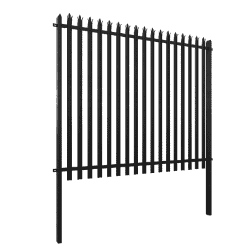
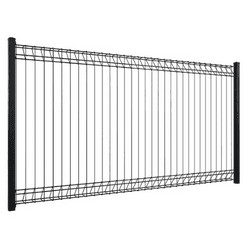
- Palisade security fencing
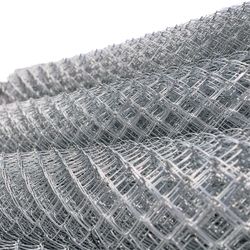
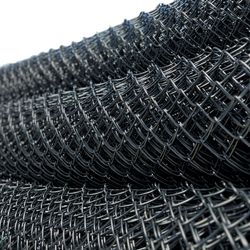
- Chainwire fencing
- Security gates
- Posts and rails
- Anti-throw screens
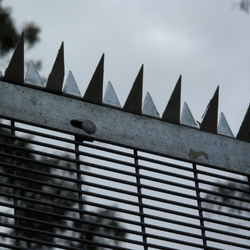
- Security fence toppings
- Custom fabricated components
This allows standard products and custom fabrication to be brought together where required to create a project-specific fencing solution.
Designing for More Than the Fence
For security and infrastructure projects, the physical fence rarely operates completely independently.
Project teams may also need to consider:
- Vehicle and pedestrian access
- Gate automation
- Access control
- CCTV sightlines
- Intrusion detection
- Existing structures
- Ground conditions and levels
- Other perimeter security measures
The fencing design therefore needs to consider how these elements interface with the physical perimeter.
Early involvement can be particularly valuable where there are unusual interfaces or custom requirements that need to be resolved before manufacturing.
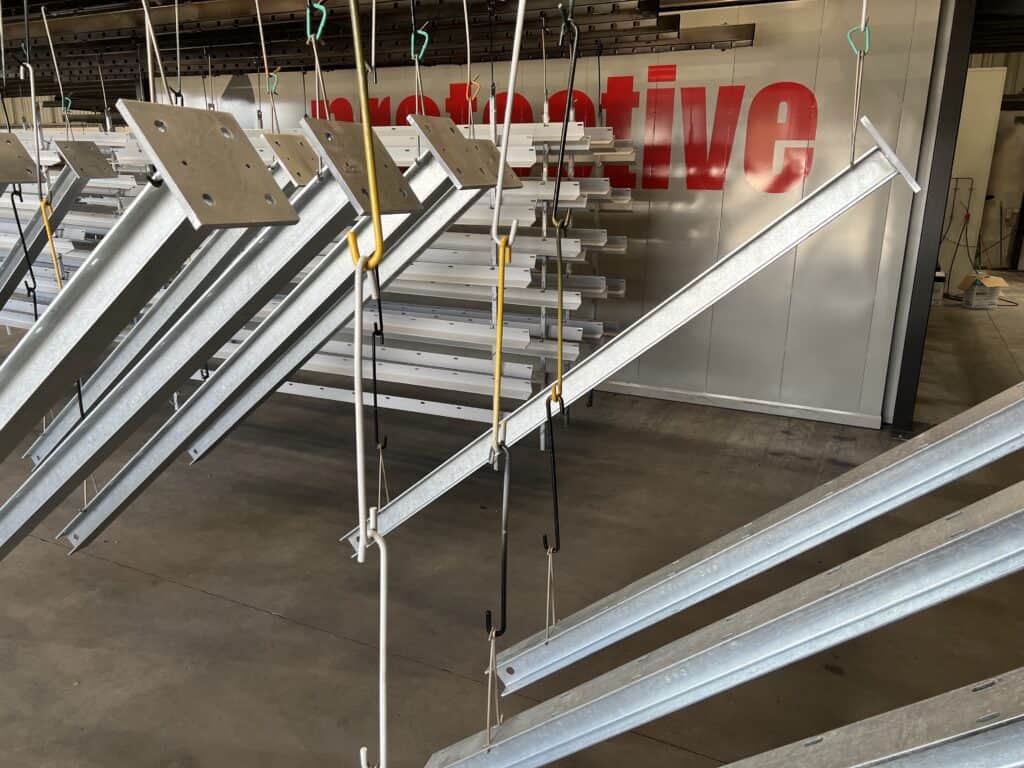
Drafting for Australian Manufacturing.
Protective Fencing has been manufacturing fencing products in Australia since 1975.
Today, our capability extends beyond manufacturing individual fencing products to supporting complex projects through in-house drafting, custom fabrication and production.
Bringing these capabilities together gives our team visibility across the journey from project requirements to the finished product.
It also means the people drawing the details understand the manufacturing environment in which those details need to become reality.
Talk to Us Early
The earlier project-specific fencing requirements are identified, the greater the opportunity to work through details before they reach the production floor.
For contractors, consultants and project teams working on projects requiring custom security fencing, fencing shop drawings or custom fabrication, our team can assist in reviewing project requirements and developing a solution suitable for manufacture.
Talk to Protective Fencing about your next project.
Phone 1300 436 200 and email sales@profence.com.au
Protecting What Matters.